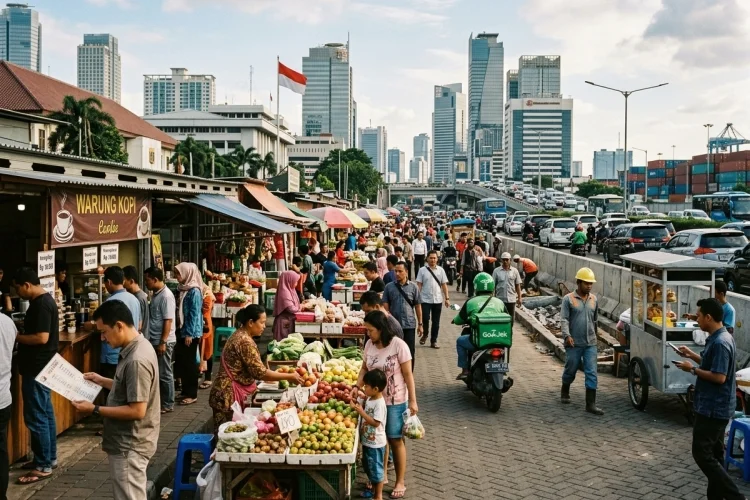
Why does your morning coffee cost more than it did last year? Why do some jobs pay much more than others? And why can a new tax, technology, or shortage change the behaviour of millions of people?
These are economic questions. Economics is often presented as a subject filled with graphs, formulas, and complicated financial terms. In reality, it is mainly about people: what they want, what resources they have, the choices they make, and the results of those choices.
Understanding what economics is and why it matters helps you make sense of daily life. It explains how prices are formed, why businesses hire workers, how governments choose where to spend money, and why events in one country can affect households elsewhere.
You do not need to become an economist to benefit from economic thinking. A basic knowledge of scarcity, incentives, supply and demand, inflation, and opportunity cost can help you manage money, evaluate news, and make better decisions.
What Is Economics in Simple Terms?
Economics is the study of how individuals, businesses, governments, and societies use limited resources to meet competing needs and wants. These resources include money, time, labour, land, energy, technology, and raw materials.
The central problem is scarcity. Resources are limited, while human wants can keep expanding. The Bank of England describes an economy as the way scarce resources such as workers, land, and materials are used.
Economics is therefore not only about wealth or stock markets; it is about making choices under constraints.
An economist might study rising rent, changing food prices, taxation, wages, business competition, or the effect of education on long-term growth. The subject connects personal choices with larger social systems.
Scarcity, Choice, and Opportunity Cost
Every economic decision involves a trade-off. When you spend money on a new phone, that money cannot also be used for savings or travel. When a government funds a railway, it may have less available for hospitals, schools, or debt reduction.
The value of the best alternative you give up is called opportunity cost. It is one of the most practical economic ideas because the real cost of a choice is not always the price written on a receipt.
For example, spending three hours watching a film may cost very little money, but it also uses time that could have gone towards work, exercise, rest, or study. Recognising opportunity cost can lead to more thoughtful decisions.
The same principle applies to businesses and governments. A company that invests in a new shop may have to delay upgrading its technology, while a government that reduces one tax may need to cut spending, raise another tax, or borrow more money.
Microeconomics and Macroeconomics
Economics is commonly divided into two main branches: microeconomics and macroeconomics. The International Monetary Fund explains that microeconomics studies individual markets and decision-makers, while macroeconomics examines the economy as a whole.
1. Microeconomics
Microeconomics focuses on consumers, workers, households, and firms. It explores prices, wages, competition, production costs, taxation, and consumer behaviour.
A microeconomist may ask why a restaurant raises its prices, how shoppers respond to discounts, or whether a large company has too much control over a market.
Supply and demand are central ideas within microeconomics. When demand for a product rises faster than its supply, its price will often increase. When supply becomes plentiful while demand remains weak, the price may fall.
2. Macroeconomics
Macroeconomics looks at wider trends such as economic growth, unemployment, inflation, interest rates, government debt, and international trade.
Gross domestic product, or GDP, is one widely used measure of economic activity. It represents the value of final goods and services produced within an economy during a particular period.
However, GDP alone does not fully measure happiness, equality, environmental quality, personal safety, or unpaid work. It can show whether economic output is growing, but it cannot tell the complete story of people’s well-being.
How Markets and Prices Work
Markets bring buyers and sellers together, while prices act as signals about supply, demand, and scarcity.
Imagine that bad weather damages a major coffee harvest. The supply of coffee may fall while demand remains strong, causing prices to rise. Consumers may buy less, businesses may search for alternatives, and producers in other regions may increase their output.
Prices can therefore help coordinate the decisions of millions of people who may never communicate directly with one another.
However, markets do not always produce fair or efficient results. Competition may be weak, consumers may lack accurate information, or an economic activity may harm people who were not involved in the original transaction.
Pollution is a common example of a negative externality. A factory may earn a profit while nearby communities carry part of the environmental or health cost. The IMF explains that private prices may not reflect the full cost to society when externalities exist.
Governments may respond through environmental rules, taxes, subsidies, public services, or other forms of economic regulation.
Why Economics Matters in Everyday Life
Economics affects your budget even when you never read financial news. Inflation changes purchasing power, interest rates influence loans and savings, and labour-market conditions affect job opportunities and salaries.
The OECD defines inflation as a general rise in the prices of goods and services purchased by households over time. It is commonly measured using a consumer price index, or CPI.
Suppose your income rises by 3% while your living costs rise by 5%. Although you are earning more money, your real purchasing power has fallen because prices are increasing faster than your income.
Economic thinking can also improve personal decisions. Before taking a loan, you can compare its total cost with the value it provides. Before changing careers, you can consider expected income, training expenses, job security, working conditions, and the value of your time.
Businesses use similar reasoning when deciding whether to hire staff, launch a product, enter a new market, or invest in equipment. Economics helps them compare costs, risks, customer demand, and possible returns.
How Economics Shapes Government Policy
Governments constantly make economic choices. They decide how much to tax, which public services to fund, how to support vulnerable households, and whether to borrow for long-term projects.
Fiscal policy involves taxation and government spending. A government may increase spending or reduce taxes to support economic activity during a slowdown. It may later reduce spending or raise revenue when debt or inflation becomes a concern.
Monetary policy is normally managed by a central bank. It influences interest rates, credit conditions, borrowing, saving, and overall demand. The U.S. Federal Reserve, for example, describes its monetary-policy goals as supporting maximum employment and stable prices.
These decisions involve difficult trade-offs. Higher interest rates may help slow inflation, but they can also make mortgages and business loans more expensive. Increased public spending may support jobs and essential services, but poorly designed programmes can waste resources or increase debt.
Economics does not always produce one perfect answer. Instead, it provides tools for comparing costs, benefits, incentives, risks, and unintended consequences.
Economics Goes Beyond GDP
Economic growth can create jobs and raise incomes, but growth figures do not reveal who receives the benefits. Two countries with similar GDP per person may have very different levels of inequality, healthcare, education, security, and environmental quality.
This is why economists also study poverty, income distribution, human capital, access to public services, and sustainable development.
The World Bank’s World Development Indicators provide internationally comparable statistics covering economic activity, poverty, education, health, trade, employment, and other development outcomes.
Modern economics also examines climate change, digital platforms, discrimination, healthcare systems, behavioural biases, and unpaid care work. An economy shapes not only how much a society produces, but also how opportunities, costs, and risks are shared.
How to Think Like an Economist
You can apply economic thinking by asking several simple questions. What resource is scarce? What incentives are influencing people’s behaviour? Who receives the benefits, and who carries the costs? What alternative is being sacrificed?
It is also useful to consider possible unintended consequences.
Imagine that a city makes public transport cheaper. The immediate benefit is lower travel costs. Wider effects may include less traffic, lower pollution, increased public spending, and greater demand that requires more buses or trains.
Thinking like an economist does not mean reducing every decision to money. It means looking beyond the most obvious result and considering trade-offs, evidence, behaviour, and long-term effects.
Economics is the study of how people and societies make choices when resources are limited. It covers everyday decisions about spending and working, as well as larger issues such as inflation, unemployment, growth, inequality, and public policy.
Learning basic economics helps you understand why prices change, how incentives shape behaviour, and why every choice has an opportunity cost. It also makes it easier to evaluate political claims, business news, and financial decisions critically.
Start by examining one choice in your daily life. Compare its costs, benefits, alternatives, and possible consequences. With practice, economics becomes more than a school subject—it becomes a useful way to understand the world.